
The Spanish Alphabet
Vowels and Consonants
Spanish has 5 vowels and 22 consonants. They're all listed below by type.
Special Letters
A few Spanish letters have unique sounds or special rules worth knowing.
💡 Tips to Master Spanish Pronunciation
- Listen actively: Listen to native speakers how they say each word.
- Practice LL and Y: They both have the same sound, in the sound in English of "J".
- Master the rolled RR: it's a multiple vibrant sound and takes muscle practice to get right.
- Spanish vowels are pure: each of the 5 vowels always have their unique sound, they don't glide into another sound like English vowels do.
- Letter names end differently: in English, most letter names end in an "ee" sound (B → "bee", D → "dee"). In Spanish, letter names almost always end in an "e" sound instead (B → "be", D → "de", T → "te").
- The letter F is a good example: in English it starts with an "ef" sound. In Spanish, that same sound comes at the end of the letter's name: "efe".
- Z and C before E/I: in Spain these sound like the "th" in "think"; in Latin America they sound like "s".
- Record yourself: compare your pronunciation to a native speaker's and improve little by little.
Resumen en español
Escucha a hablantes nativos, practica la LL/Y y la RR vibrante, y recuerda que las vocales españolas suenan siempre igual. En inglés los nombres de las letras suelen terminar en un sonido "i" (bee, dee), pero en español terminan en "e" (be, de, te) — por eso la F en inglés empieza con "ef" y en español termina igual: "efe". La Z y la C antes de E/I suenan como "z" en España y como "s" en Latinoamérica.
Are you a Spanish Student?
Download our free Spanish Materials
-
Sale!
El Abecedario – The Alphabet
Original price was: $5.00.$2.00Current price is: $2.00. Add to cart -
Sale!
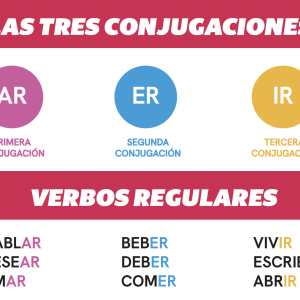
Spanish Regular Verbs Basic
Original price was: $5.00.$2.00Current price is: $2.00. Add to cart -
Sale!
Regular Verbs in Spanish
Original price was: $4.99.$1.99Current price is: $1.99. Add to Shopping Cart